
Love the Kitchen? Great. Now Let's Talk About the Boring Stuff.

8 Things You Should Notice Before Falling In Love With A Home

You’ve found a home in the right location. It has the square footage you want, enough bedrooms and bathrooms, and maybe even that gorgeous kitchen you’ve been dreaming of- but, before you decide a house is a keeper based on how it looks, take a few minutes to consider how the home functions.
A home is more than its finishes. It’s a system, with many different components working together to create a comfortable, functional and healthy environment for the people who live there. The good news? Noticing a potential problem doesn't necessarily mean you should walk away from the home. It simply means you may want to ask more questions or have the issue evaluated by an appropriately qualified professional.
Here are eight “boring” things I encourage homebuyers to pay attention to during their next home search:
1. Is the Temperature Comfortable Throughout the Home?
👀 LOOK FOR: noticeable temperature differences between rooms.
Does one bedroom feel considerably warmer or colder than the
others? A sunny room may naturally be warmer than a shaded room, but a significant or unexpected temperature difference is worth noticing.

💡 WHY IT MATTERS It could be related to things such as inadequate insulation, air leakage, leaky or poorly balanced ductwork, heating or cooling equipment, or the location of the room within the home. Keep in mind: air leaks don't only happen around windows. Air can move through many parts of a home's building envelope.
2. What About Temperature Differences Between Floors?
👀 LOOK FOR: a basement, main floor or upper floor that feels noticeably different.
Most of us expect a basement to be cooler than an upper floor. That's normal. But what if one floor feels significantly different from another?
💡 WHY IT MATTERS Like temperature differences between rooms, large temperature differences can sometimes point to issues with insulation, air leakage, ductwork, heating or cooling, or the way the home is ventilated. If the home has a crawl space, that's another area worth paying attention to.
Don't just ask, “Does the house have air conditioning?” Ask yourself, “Does the house feel comfortable?”
3. Ventilation: Is the Home Getting the Fresh Air It Needs?
This one can feel a little confusing because we generally want to avoid unwanted air leaks and drafts, but, while uncontrolled air leakage is not ideal, intentional ventilation is a good thing.

👀 LOOK FOR: During a showing, notice whether the home has working bathroom exhaust fans, a range hood that vents appropriately (and hopefully to the outside), strong or persistent musty odors, excessive humidity or condensation, other unusual odors.
💡 WHY IT MATTERS Proper ventilation helps remove pollutants, odors and excess moisture from the home.
4. Moisture & Water: Follow the Water
Water is one of the things you really don't want to ignore when looking at a home.
👀 LOOK FOR: Take a peek under sinks, around toilets and tubs, around showers, near water heaters, in basements, around windows, on ceilings and walls, and in areas where plumbing or water is being used. Is there staining, discoloration, warped materials, musty odors or other signs that water may have been present?
💡 WHY IT MATTERS: Moisture can damage building materials and create conditions where mold can grow.
Important: a musty smell does not automatically mean there is mold, but it is worth asking questions and investigating further.
5. The Mechanicals: What's Keeping the House Running?
When buying a home, it's common to ask about the age of the furnace, boiler and air conditioner—and for good reason. Replacing major mechanical equipment can be an expensive proposition, but age isn't the only thing to consider.
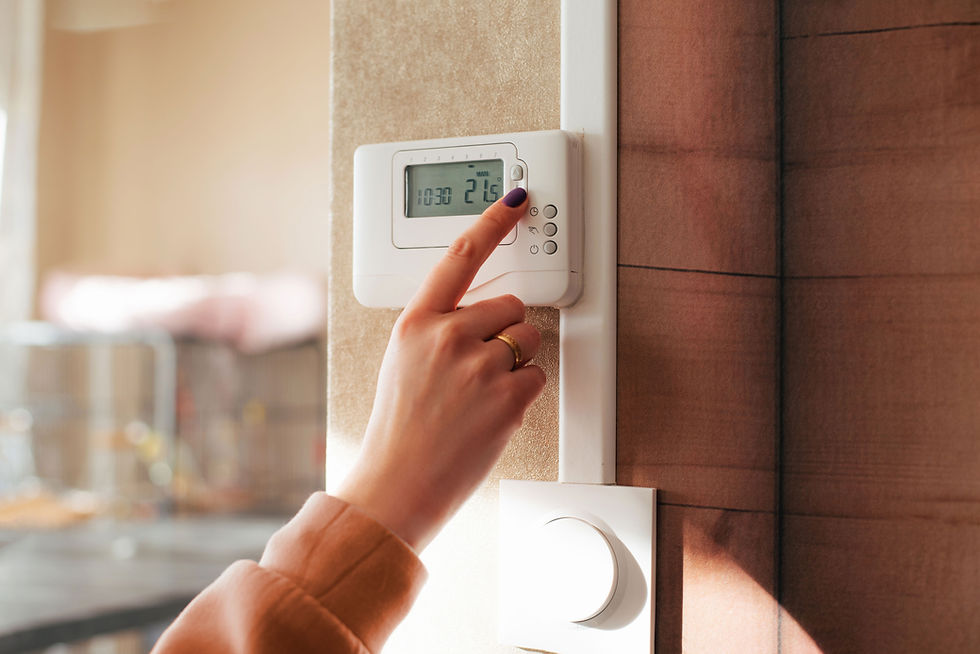
👀 LOOK FOR: What type of equipment is installed; whether it is gas, electric or another system; how well it appears to be maintained; whether the home feels comfortable; and whether the equipment appears to be operating properly- and don’t forget the age and condition of the water heater.
💡 WHY IT MATTERS: Remember those temperature differences you noticed earlier? They could potentially be related to the heating or cooling equipment—or they could be related to ductwork, insulation or air leakage.
This is one area where a qualified home inspector or appropriate HVAC professional can provide much more information than you can determine during a showing.
6. Pests: Who Else Wants to Live Here?
Let's be honest, we would all rather talk about the backsplash and granite countertops, but while you're admiring the kitchen, keep an eye out for signs that other residents may already have claimed the house.

👀 LOOK FOR: Mouse or other rodent droppings, insect activity, wasps' nests, and openings where pests could enter.
💡 WHY IT MATTERS: you want to know who you're sharing your future home with before you move in.
7. Windows & Doors: Open, Close & Look Around
Windows and doors do more than provide a view and make an entrance. They are also important parts of the home's building envelope.
👀 LOOK FOR: Water damage, mildew or staining, noticeable drafts, condensation, windows or doors that are difficult to open or close, doors that stick, gaps or visible daylight around exterior doors.
💡 WHY IT MATTERS: Since doors and windows are direct openings to the outside, they can show signs of moisture or ventilation issues with the home. Windows or doors that are difficult to open or close may show settling of the home.
A sticky window or door doesn’t automatically mean there's a problem, but if something seems unusual, notice it, ask about it and have it evaluated when appropriate.
8. Emergency & Safety Stuff

This may be the least exciting part of your home search—but it's pretty important. Starting with radon- radon is a naturally occurring radioactive gas and is a significant concern in many parts of Colorado, including communities along the Front Range.
👀 LOOK FOR If you're buying a home, find out whether there is an active radon mitigation system, a passive radon system, or no mitigation system. Keep in mind newer homes may have been built with a mitigation system within the walls, so you may not see it- check the listing or ask the owner.
And regardless of whether a mitigation system exists, testing is important. A previous radon test can provide useful information, but testing the home you're purchasing is an important part of understanding its current condition.
Also, while you're thinking about safety, take a look at the home's smoke and carbon monoxide alarms. Smoke alarms should be appropriately located throughout the home, and carbon monoxide alarms are especially important in homes with fuel-burning appliances or attached garages.
💡 WHY IT MATTERS: These aren't exactly the features you're going to brag about when showing your friends your new house—but they can be some of the most important.
The Big Picture
Buying a home isn't just about finding one you love. It's about understanding what you're buying. You don't need to become a home expert, you simply need to look beyond the surface and start ask different questions- and remember: finding something that raises a question doesn't automatically mean you've found a bad house. It means you've found something worth investigating.
Want to look a little deeper?

As part of my Penny's Home Advantage for Buyers Program, I help buyers look beyond the traditional features of a home and consider factors that can affect comfort, functionality and the indoor environment.
If you'd like my more detailed Healthy Home Buyer Checklist, reach out and I'll be happy to share it, because when you're buying a home, it's nice to know more than just what you like about it—you want to know how it works, too.
Comments